

Love Records It All
A Sermon on Remembering the Unremarkable in Parshat Matot-Masei (July 10, 2026)

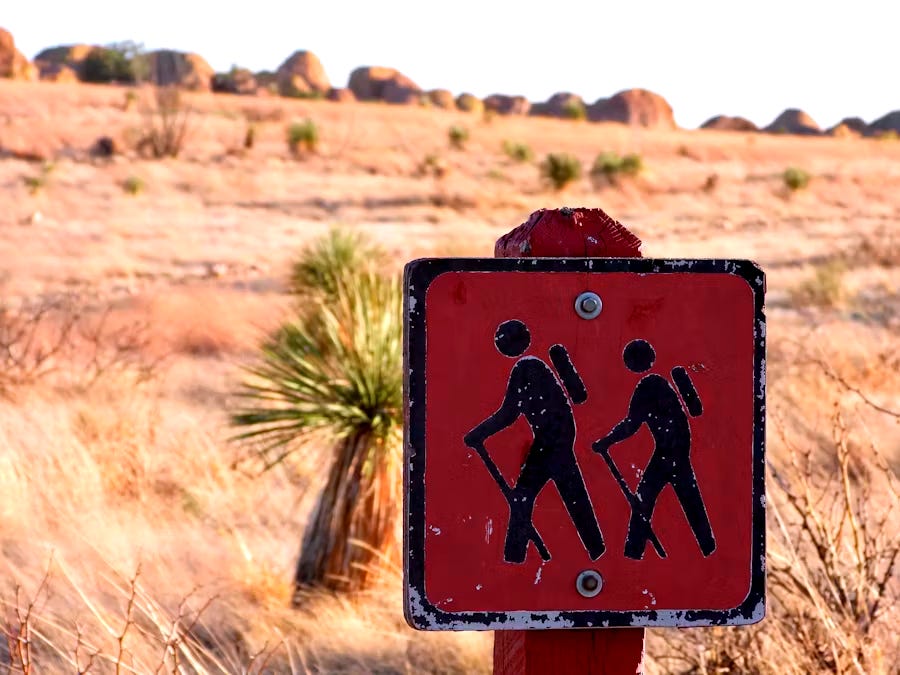
Parshat Masei begins with a strange, repetitive locution. It essentially says – “These are the Israelites’ journeys and goings out, and these are their goings out and their journeys.” The sentence itself doesn’t move forward in the way that a sentence is supposed to. It sounds like someone who keeps returning to the same memory, turning it over, unable to just say it once and let it go.
As if to prove the point, the Torah then gives us the list of the individual places that they went. It lists 42 place names – Ritmah, Rimon Peretz, Livnah, Risah… We don’t know what happened at most of these places. Probably nothing. But the Torah, which can compress an entire life in two verses, stops here and gives us all 42 on purpose.
Why? The 19th-century Hasidic rebbe known as the Ishbitzer suggests that each of the 42 stops has a mystical meaning. Or maybe, as another rebbe known as the Sfas Emes explains, our ancestors could not skip a single encampment because every station held its own small tikkun, its own little repair that could only happen because they visited those places. All our detours and destinations contain essential lessons.
The Parable of Remembering
It could also be that Moses records all 42 stations because he knows that one day someone will forget them if he doesn’t write them down. Maybe even the people who walked those roads themselves will forget them. Covenantal memory was never meant to depend on perfect human memory. It depends on a people willing to tell a story over and over again.
There’s a teaching about this that touches my heart. It’s brought by the medieval exegete, Rashi, interpreting a 9th century text known as the Midrash Tanchuma. Rashi tells a parable of a king with a sick son. The king took him on a long journey to find him medicine. On the way back, the father started to count all the places they had stopped. “Here’s where we slept.” “Right over here, this is where you were cold.” “Here is where you smiled again.” Nothing big happened. The child had an experience, and the father was there at that moment and recounted it.
In the same way, Rashi says, nothing big in the world’s accounting happened at Ritmah or Rimon Peretz. But God is the parent, lovingly saying, “Over here is where you stubbed your toe.” “Over here is where we saw that beautiful sunset.” It’s not about drama, just witnessing.
The defining act of love turns out to be exactly this – refusing to let ordinary moments go unnoticed. Naming the unremarkable is how love proves it was paying attention the whole way through, even to the parts no one else would think to write down. Love records it all.
This week, someone I love very much turned 93 – my father. The whole family gathered to celebrate him. We laughed over old stories, the 42 stations. Remember that, dad? Remember? Some of it he remembered, but most he didn’t. He just kept saying, “Oh, it was my favorite thing in the world, taking you to school.” Nothing special, just going to school. Memory had become half for him to hold and half for us to hold.
We Don’t Get to Fast Forward
The Torah insists that memory is not atomistic. It’s not yours or mine alone. It is ours. We place memory into words and rituals and communities that can carry it, when individuals can no longer.
Many of us try to fast forward through the difficult things in the wilderness without marking them. We take a diagnosis, a loss, a long stretch of frustration, and compress it into a sentence. “It was a hard year.” No 42 stations; It was a hard year. To be sure, there’s great compassion in the compressing of that file. But something is lost when the compression happens before the stations have been named.
These are our journeys that are goings-outs, and these are our goings-outs that are journeys. Each one is precious, each one a memory, each one yearning to be marked. This parsha teaches that we’re not alone. Someone, somewhere, is watching, listening, insisting that the moments of our lives count enough to be remembered.
Watch the entire sermon, delivered at Romemu on July 10, 2026.
Amen. "The defining act of love turns out to be exactly this – refusing to let ordinary moments go unnoticed. Naming the unremarkable is how love proves it was paying attention the whole way through, even to the parts no one else would think to write down. Love records it all." I feel lucky to know Rabbi Ingber his wife and Sister in Law and their parents and family may you continue to go from strength to strength Xo